
The Florida homestead exemption lowers the taxable value of your primary home. It also starts the Save Our Homes cap, which limits yearly assessment increases. This guide shows who qualifies, how to file in Hillsborough County, and how Amendment 3 changes the exemption.
What Is the Florida Homestead Exemption?
The homestead exemption is a property tax break for your primary residence. You apply once with your county property appraiser. The exemption renews each year while you still qualify.
How Much Does the Homestead Exemption Save?
The First $25,000
The first $25,000 of assessed value is exempt from all property taxes. That includes school taxes. Every approved homestead owner gets this amount.
The Second Exemption
A second exemption applies to non-school taxes on value between $50,000 and $75,000. Florida adjusts that amount for inflation. The 2026 total comes to $51,411.
What That Means in Dollars
Savings depend on your millage rate. Many Hillsborough homeowners save between $600 and $1,100 per year. Check your TRIM notice to see your own numbers.
Who Qualifies for the Homestead Exemption?
Ownership and Residency on January 1
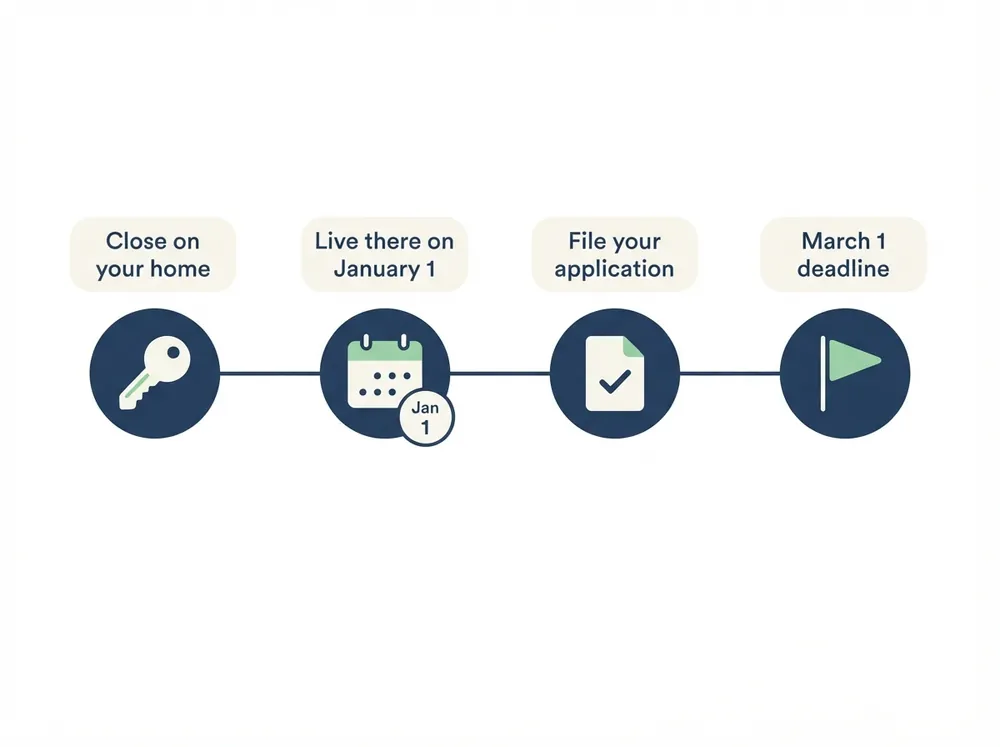
You must own the home and live there on January 1. The home must be your permanent residence. Hillsborough also requires that you make the county your legal domicile.
One Homestead Only
You can claim only one homestead. Second homes and rentals do not qualify. The appraiser can place a lien for any taxes you avoided by mistake.
Documents You Need
Gather your deed and a Florida driver’s license or ID. Add your vehicle registration showing the Florida address. Have Social Security numbers ready for you and your spouse.
How to Apply in Hillsborough County
Apply Online
The Hillsborough County Property Appraiser runs an online homestead application. You enter your property and residency details. Save your confirmation for your records.
Apply in Person or by Mail
You can also apply at 601 E Kennedy Blvd in Tampa. The Exemptions Department accepts mailed forms too. Bring original residency documents to an in-person visit.
The March 1 Deadline
Florida requires you to file by March 1 for that tax year. If you close in November 2026 and live there by December 31, you file by March 1, 2027. Late filing needs proof of extenuating circumstances.
Check Your Status Each Spring
Search your address on the property appraiser’s site each spring. Confirm the homestead amount appears on your record. Your August TRIM notice should show the lower taxable value.
Other Exemptions You May Qualify For
Senior, Veteran, and Disability Exemptions
Hillsborough offers added exemptions for seniors, veterans, and people with disabilities. Some have income or service rules. Ask the appraiser which ones fit your situation.
Long-Term Resident Seniors
Some low-income seniors can claim an extra exemption after 25 years in the same home. Eligibility depends on income, home value, and your city’s ordinance. Confirm the rules before you file.
Save Our Homes Cap and Portability
The Annual Cap
After you receive homestead, the Save Our Homes cap begins. It limits assessment growth to 3 percent or inflation, whichever is lower. The 2026 limit is reported as 2.7 percent.
Moving Within Florida
Portability lets you transfer up to $500,000 of your saved assessment difference to a new homestead. You must move within three tax years. File Form DR-501T with the new property appraiser.
Why Selling Later Matters
Your cap resets when you sell and your buyer faces full market value. Portability can protect your savings on the next home. Read our guide on how to sell property in Florida before you list.
Amendment 3 and Your Homestead
What Changed
Voters passed Amendment 3 on November 3, 2026. The non-school exemption rises to $150,000 in 2027 and $250,000 in 2028. The $25,000 school-tax exemption stays.
What It Means for Buyers
Reports say new residents who are not Floridians on December 31, 2026 get the current exemption first. The larger amount starts in their fifth year of exemption. Confirm your timing with the appraiser before closing.
Why Local Budgets Matter
Larger exemptions cut local tax revenue. Cities and counties may trim services or raise millage rates. Our Florida property taxes guide explains the full formula.
Common Homestead Mistakes
Missing the Deadline
Missing March 1 usually costs you a full year of savings. It also delays your Save Our Homes cap. File early to avoid the risk.
Keeping Exemptions After a Move
Tell the appraiser when you move or rent your home. Old exemptions can trigger back taxes. Keep your records current.
Counting a Rental as Your Homestead
A rental property cannot receive homestead. Investors should read how to buy a second property for correct tax planning. Use the right exemption for each property.
Plan Your Purchase Around Homestead
Before You Buy
Read our guide to deciding to buy before you make an offer. Compare loans in what is the best type of home loan. Budget for taxes using the new assessed value.
Compare Areas
Taxes differ by city and district. Browse the best Tampa neighborhoods for families to compare areas. Then check each address with the property appraiser.
Track the Market
Prices affect your assessed value over time. Our Tampa real estate market page shows recent trends. Review it each year before your TRIM notice arrives.
Florida Homestead Exemption FAQs
When do I file for homestead?
File by March 1 of the year you want the exemption. You must own and live in the home on January 1. Late filings need proof of extenuating circumstances.
Do I need to reapply every year?
No. The exemption renews automatically while you qualify. You must tell the appraiser if you move or rent the home.
Does homestead cover school taxes?
The first $25,000 applies to all taxes, including school taxes. The second exemption applies only to non-school taxes. Amendment 3 raises only the non-school portion.
Can I get homestead on a home I bought in December?
Yes, if you live there as your permanent residence by January 1. You then file by the next March 1. Confirm the timing with the property appraiser.